
Beyond Victim and Villain

Junho Jung
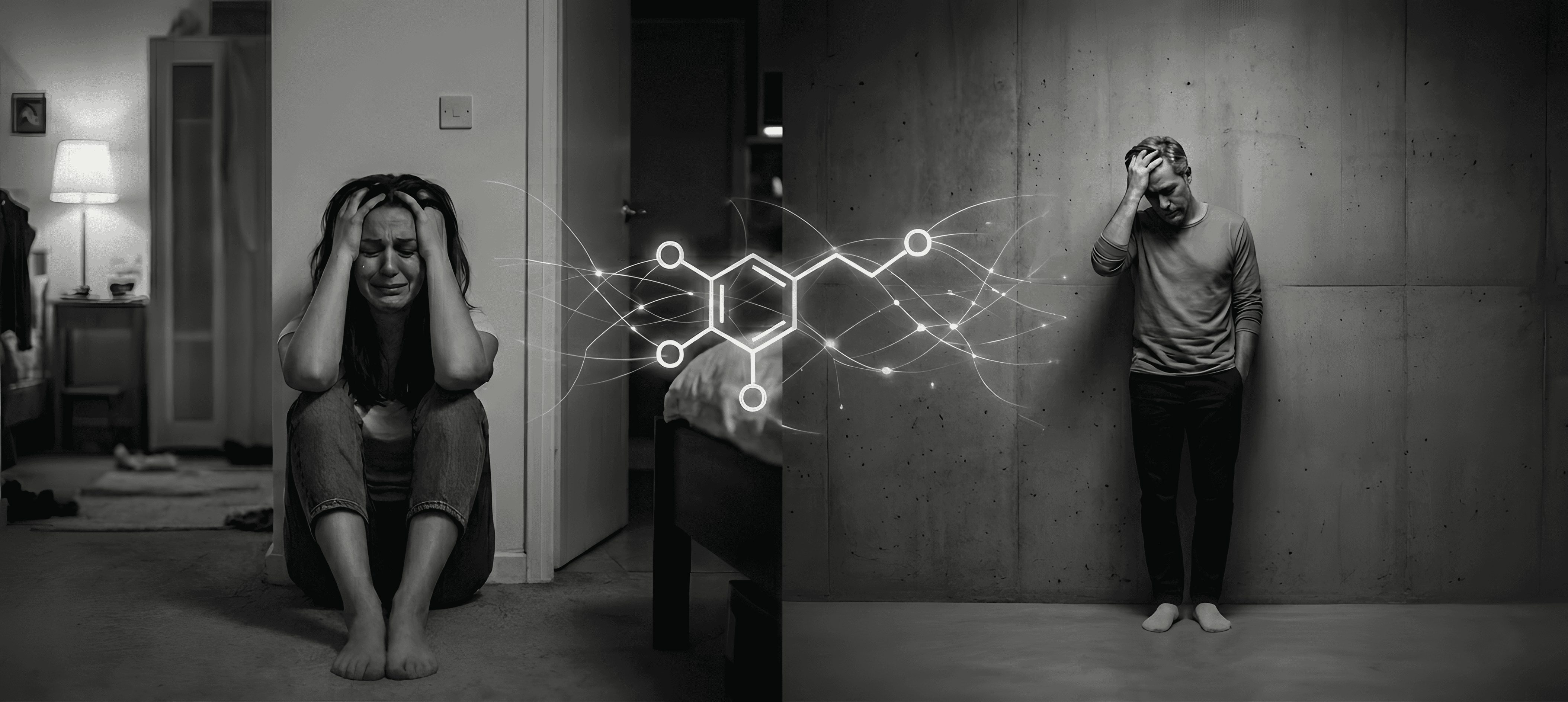
Beyond the binary of victims and villains in modern romance
Modern discourse loves a simple story. In relationships, the simplest narrative is almost algorithmic: the one crying is the victim; the one looking cold or distant is the villain.
This emotional binary feels satisfying. It gives observers an instant blueprint for whom to comfort and whom to condemn. But once you examine how attraction, neurobiology, and interpersonal dynamics actually interact, this framework reveals itself to be dangerously crude. It hides the subtle mechanics of desire, dopamine, power, and personal responsibility—while entirely erasing the quiet exhaustion of those who practice emotional boundaries.
Trauma Bonding Without a Mastermind
We often imagine trauma bonding as a calculated trap laid by a master manipulator—someone who deliberately meters out affection and withholdings to induce addiction. That scenario exists and warrants moral condemnation.
Yet reality presents a messier, far more common alternative: a bond that forms without an architect.
An exceptionally attractive or magnetic person can trigger intense dopamine spikes in others simply by existing. If they are busy, overwhelmed, or simply not that interested, their availability becomes inconsistent. To a sensitive or insecure observer, this fluctuating attention feels like a hot-and-cold strategy: "Sometimes they light up my world; sometimes they disappear."
From the outside, it looks like emotional sabotage. From the inside, it is often nothing more than a person enforcing normal boundaries and trying not to lead someone on. The addiction is real, but there is no evil genius behind the curtain—only a collision between one person’s craving and another’s standard life.
The Paradox of Unchosen Power
There is a cohort the public rarely sympathizes with: people who spend their lives being objectified, projected upon, and over-analyzed.
High natural charisma or physical beauty triggers unearned projections. Observers treat these individuals as prizes, saviors, or soulmates before knowing them. When a charismatic person acts with casual warmth, it is misread as romantic promise. When they take time to reply, it is cataloged as a mind game. When they set a clear boundary, it is branded as cruelty.
In response, many choose self-preservation. They shut down small talk early. They withdraw from dating pools. They keep a firm distance—not out of malice, but out of sheer fatigue from carrying other people’s emotional expectations.
Outer observers call them "cold," "aloof," or "emotionally unavailable." The inner reality is usually far more grounded: "I am exhausted. I want a balanced connection, not to serve as someone else's entire sense of self-worth."
Victim Theater: When Pain Becomes a Shield
Conversely, there is a darker pattern that simple narratives miss: the weaponization of vulnerability.
Some individuals quickly claim the victim identity in every conflict. They cry publicly, recount one-sided stories, and secure instant social protection. Yet privately, they relentlessly cross boundaries—sending midnight text blasts after a explicit refusal, demanding "closure" as a euphemism for control, or smearing the other person socially while still attempting to maintain access to them.
To the audience, they are the fragile party suffering under a heartless ex. To the target, they are an aggressive actor using emotional guilt as a lever of control.
This is not naive heartbreak; it is manipulative image management. Using performative suffering to evade accountability and control the narrative is an active form of emotional exploitation.
The Lazy Comfort of Universal Tropes
This brings us to popular blanket claims like "All men cheat" or "All women play the victim."
These declarations reveal very little about gender and a great deal about the speaker. Proclaiming that "all men cheat" often translates to: "I repeatedly choose a specific type of partner, ignore early red flags, and need a sweeping theory to absolve my judgment." Claiming that "all women are manipulative" translates to: "I pursue high-drama dynamics and externalize the blame when they collapse."
High-conflict, high-dopamine relationships rarely happen by accident. They are shaped by individual filters—what we find exciting, what boundary violations we tolerate, and what we believe we deserve. Sweeping generalizations are merely intellectual shortcuts to avoid self-examination.
Looking at Patterns, Not Volume
A mature critique of human relationships requires discarding emotional volume as a measure of moral authority. You cannot assign guilt based on who cries loudest, nor can you label self-preservation as abuse.
Dopamine can make anyone temporarily self-absorbed. Victims can manipulate, and distant figures can simply be exhausted adults enforcing healthy limits.
The only intellectually honest stance is to suspend immediate judgment. Stop measuring who is right by the intensity of their distress, and start looking at the long-term pattern of behavior on both sides: Who is exploiting? Who is setting boundaries? And who is using their pain as a weapon?