
Why the Online World Feels Flawed: Where the True Intellectuals Went

Junho Jung
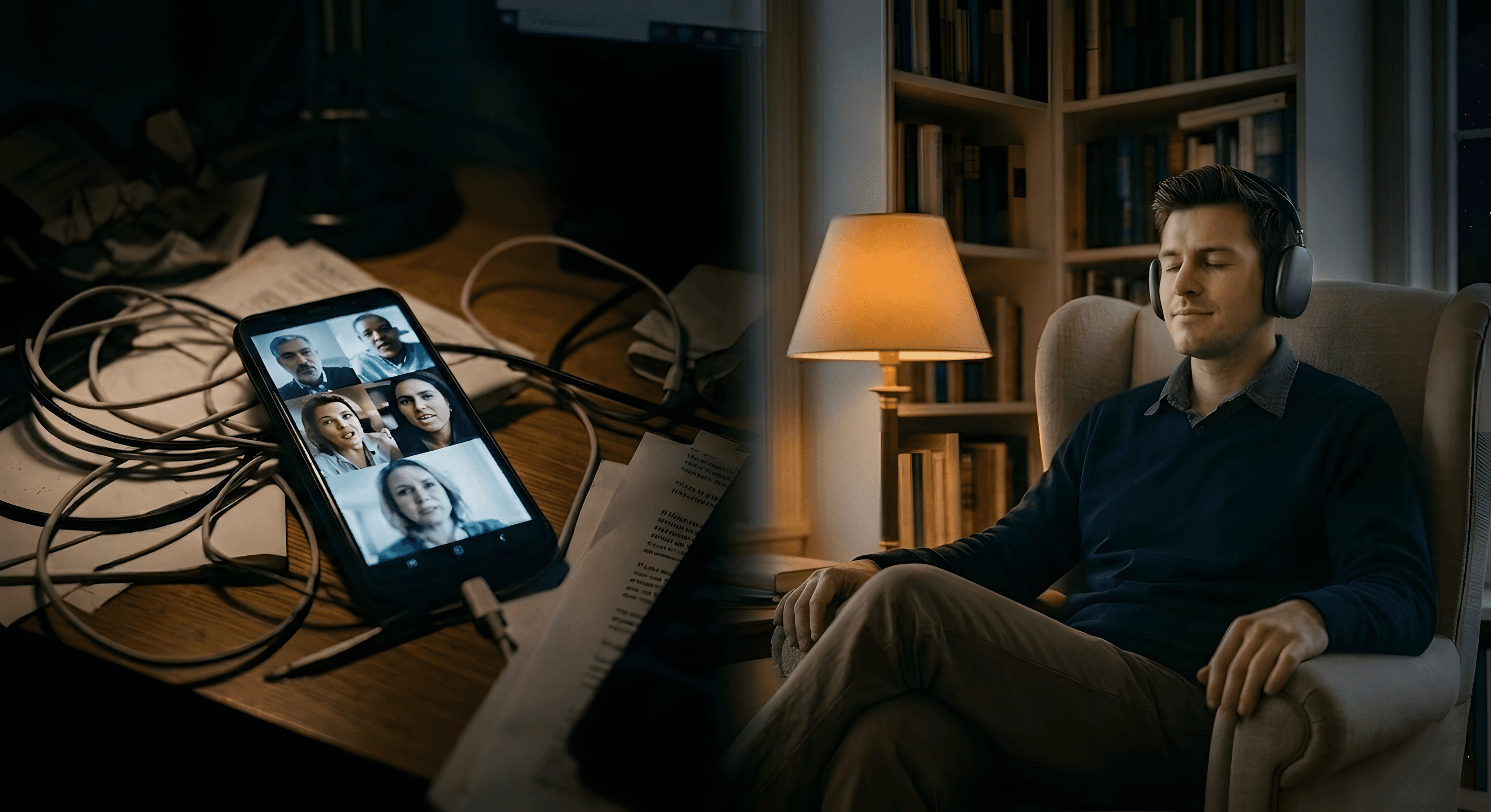
Have you ever felt like the online space is becoming increasingly noisy and exhausting? It often leaves us with the bittersweet impression that society’s overall discourse is deteriorating. However, if we look a little closer, the reality might be quite different. It is not that people, as a whole, have lost their depth; rather, it is a structural phenomenon of where we choose to spend our energy.
Highly introspective and thoughtful individuals tend to distance themselves from noisy online communities. Instead, they prefer to invest their time in cultivating deep, meaningful connections with a select group of people in the offline world. They choose a quieter, more private life.
Online platforms, by nature, grant an equal voice to everyone—which is a beautiful aspect of democracy. However, this also means that highly emotional and unfiltered opinions can easily drown out calm, rational discourse. In an environment dominated by such high-decibel emotionalism, it is only natural for emotionally healthy and rational individuals to quietly step back and withdraw from the crowd.
Think of social structures as a pyramid. Naturally, the base is much wider than the apex. Consequently, those who raise their voices without much deep reflection outnumber those who offer well-considered insights. Because the platform costs nothing to speak on, the loudest voices often end up dominating the space.
Crucially, a flattened digital ecosystem lacks the inherent mechanism to grade this pyramid; the vast base often lacks the intellectual patience or criteria to distinguish highly refined, complex insights from shallow, sensational noise. When the crowd cannot evaluate true quality, nuance is treated with the same weight as mere volume.
This explains exactly why the modern digital world can feel so frustrating. Human intellect has not downgraded across the board. Rather, the mainstream online space is simply being occupied by those who shout the loudest. True thinkers choose not to engage in these spaces—not out of arrogance, but simply because they find little value in chaotic, unproductive arguments.
As a result, insightful individuals disperse to focus on their own personal growth and independent paths, while the loudest groups gather at the center, shaping the mainstream narrative. To an outside observer, it creates an illusion that the entire world is losing its depth. In reality, a silent, invisible polarization of intellectual quality is accelerating faster than ever before.
This phenomenon aligns perfectly with the economic concept known as the "Lemon Market" theory. Just as in a market where buyers cannot distinguish high-quality goods from low-quality ones, premium products eventually withdraw because they are not valued properly or are even dismissed. In the end, the marketplace is left only with low-quality products that look shiny on the outside but lack substance.
Applied to our digital reality, when genuine insights are ignored or attacked due to this evaluative blindness, the thinkers leave. The remaining crowd—trapped in a loop of similar frequencies—ends up locked in endless cycles of conflict, cynicism, and mutual hostility.
It is a poignant reflection of today's digital landscape, reminding us why we must look beyond the screen to find true substance.